Friday, March 25, 2022

How To Neutralize A Color

So a quick peek at your wheel shows you violet sits directly across from yellow, blue-violet sits directly across from gold, blue sits opposite orange and green sits opposite red on the wheel. It is common among some painters to darken a paint color by adding black paint—producing colors called shades—or lighten a color by adding white—producing colors called tints. However, it is not always the best way for representational painting, as an unfortunate result is for colors to also shift in hue.

how to neutralize a color - So a quick peek at your wheel shows you violet sits directly across from yellow

For instance, darkening a color by adding black can cause colors such as yellows, reds, and oranges, to shift toward the greenish or bluish part of the spectrum. Lightening a color by adding white can cause a shift towards blue when mixed with reds and oranges. Sometimes when correcting pigmentation, it's advisable to start with the complementary color, set with powder and then add the skin tone. However, it's important to understand that you will not always need a complementary color in its purest concentration to achieve a camouflage. Especially when considering where you're applying the make-up.

how to neutralize a color - It is common among some painters to darken a paint color by adding black paintproducing colors called shadesor lighten a color by adding whiteproducing colors called tints

Therefore, the layers applied to the skin should be as fine as possible, if the intention is to keep the surface looking like natural skin. This is when your knowledge and understanding of color theory comes into play. Mixing complementary colors with neutralizers and similar undertones to the skin can help achieve effective corrections in fewer layers.

how to neutralize a color - However

You'll notice that not all complementary colors make grey or black. For example mixing red and green should yield a neutral black color, but if the red has a little more of a blue tint and the green also has a little blue, you won't get black. Though the lightest values aren't neutral greys or browns, they're good to keep in mind for when you're painting and need to tone down your hues.
how to neutralize a color - For instance

If you're unaware that mixing blue and orange will make a grayish brown, and you start painting some orange flowers on top of your still-wet blue sky, your flowers will look pretty muddy. If, though, you're painting the sky and it's just too blue, you can add a bit of orange to your paint to tone down or neutralize the blue. In the visual arts, color theory is a body of practical guidance to color mixing and the visual effects of a specific color combination. Color terminology based on the color wheel and its geometry separates colors into primary color, secondary color, and tertiary color.
how to neutralize a color - Lightening a color by adding white can cause a shift towards blue when mixed with reds and oranges

Aristotle (d. 322 BCE) and Claudius Ptolemy (d. 168 CE) already discussed which and how colors can be produced by mixing other colors. The influence of light on color was investigated and revealed further by al-Kindi (d. 873) and Ibn al-Haytham (d.1039). A formalization of "color theory" began in the 18th century, initially within a partisan controversy over Isaac Newton's theory of color and the nature of primary colors. From there it developed as an independent artistic tradition with only superficial reference to colorimetry and vision science.

how to neutralize a color - Sometimes when correcting pigmentation

We've covered a lot in this lesson, including many definitions used in talking about color, mixing colors to get secondary and tertiary colors, and the color wheel. You've had a chance to mix your paints to create colors you might use in future paintings, and kept notes on the paints used to create these colors. Using the Mona Lisa as an example, we've seen how artists use warmer and darker colors to push objects to the foreground, while using cooler and lighter colors has the opposite effect.

how to neutralize a color - However

So, when selecting complementary colors, we chose the highlighter in the highest concentration, we don't want the fairness of the skin to be warmed too much by the corrector tones. Then equal parts of the X yellow neutralizer and the bright orange to bring it close to the natural skin tone and the X30 to correct the dark pigmentation. This mixture together would effectively conceal the dark circles and appear more natural to the surrounding skin. Then a touch of the red to help neutralize the green undertones. This mixture together would effectively conceal the dark circles and appear more natural to the surrounded skin.

how to neutralize a color - Especially when considering where youre applying the make-up

If you were trying to mix an intense green you would use a cool yellow, like ayellow light hansaand a warm blue such as cerulean blue because they are closer together on the color wheel. You would not want to use a yellow-orange color, such as yellow-orange azoand anultramarine blue because they are further apart on the color wheel. These colors have a bit of red mixed in with them, thereby combining all three primary colors in one mixture, making the final color a somewhat brown- or neutral-green. However, when complementary colors are chosen based on the definition by light mixture, they are not the same as the artists' primary colors.

how to neutralize a color - Therefore

This discrepancy becomes important when color theory is applied across media. Digital color management uses a hue circle defined according to additive primary colors , as the colors in a computer monitor are additive mixtures of light, not subtractive mixtures of paints. This example shows the difference cooler, natural light, can have compared to warmer, artificial light. The original image was taken with an electronic flash of around 4200 Kelvin. This tends to make everything look a little more stark and sharp, without the balance of warmth and can be more unflattering in comparison.

how to neutralize a color - This is when your knowledge and understanding of color theory comes into play

That's why when we consider candle light, everything looks more appealing, the warmth and contrast within the face is more flattering. But before we get into how to neutralize red tones in hair, let's first address why this happens (because, no, you're not just seeing things). Bianca Hillier, celebrity colorist and Olaplex ambassador, explains that black and brown hair — whether virgin or color-treated — has red underlying pigment.

how to neutralize a color - Mixing complementary colors with neutralizers and similar undertones to the skin can help achieve effective corrections in fewer layers

"When you lighten your hair, your natural hair is lifted to make room for the new color, so it becomes reddish-orange and then yellow," he tells Bustle. Here, expert-backed advice for how to neutralize red tones in hair and how you can prevent them from quickly turning back up. When mixing colored light , the achromatic mixture of spectrally balanced red, green, and blue is always white, not gray or black. When we mix colorants, such as the pigments in paint mixtures, a color is produced which is always darker and lower in chroma, or saturation, than the parent colors.

how to neutralize a color - Youll notice that not all complementary colors make grey or black

This moves the mixed color toward a neutral color—a gray or near-black. Lights are made brighter or dimmer by adjusting their brightness, or energy level; in painting, lightness is adjusted through mixture with white, black, or a color's complement. The bar on the left shows mixing two complementary colors, in this case, cadmium red and pthalo green.

how to neutralize a color - For example mixing red and green should yield a neutral black color

What Are 2 Ways To Neutralize A Color At the top is pure cadmium red, mixed with progressively more and more pthalo green as it moves down. You'll see in the middle where the colors are mixed closest to 50/50, the color becomes a neutral dark grey. The bar on the right is showing value—the lighter values are created by adding increasingly more white to the dark grey in the middle of the left column. A tetradic color scheme, which uses a combination of four colors, is similar to the triadic because it is vibrant and should contain one dominant color.

What Are 2 Ways To Neutralize A Color

The arrangement of colors comes from two sets of complementary colors, meaning the four hues are not equally placed around the color wheel. A rectangular scheme may use a combination of red and green with red-orange and blue-green. Watch how warm and cool colors are used in this scheme to create the desired effect. Then the red , in less concentration and an even smaller touch of the bright orange to bring it close to the natural skin tone. While a purple shampoo might be the trick for your blonde friends, it won't work the same to neutralize your red tones, and it all goes back to color theory. The key to getting rid of an unwanted tinge is to use the right shade to cancel it out.

how to neutralize a color - If youre unaware that mixing blue and orange will make a grayish brown

For instance, purple shampoo eliminates yellow tones, and blue shampoo cancels orange. If you're experiencing true redness, you'll need to neutralize it with a product that has green or teal tones instead. The blue and green circles can help you to find the most likely mixing complements for any cool mixture, if you can identify the location of the mixture on the artist's color wheel .

how to neutralize a color - If

• The artist's color wheel cannot accurately show mixing complementary colors, because of the problems described above with subtractive color mixing. Near neutrals are obtained by mixing pure colors with white, black or grey, or by mixing two complementary colors. Red, blue and yellow are the three primary colors for what colors make black paint when mixed together.

how to neutralize a color - In the visual arts

Simply mix equal amounts of red, blue, and yellow together and you will get a nice black. If you use a lighter red and blue you will end up with a brown – so be sure to use darker colors as shown in the color chart above. If you want the color of black to be a little more bluish, just add a little more blue to your color mixture. A complementary relationship between colors means that they are on opposite sides of the color wheel. When true complements are mixed together, they can neutralize or cancel each other out, producing a gray or black.

how to neutralize a color - Color terminology based on the color wheel and its geometry separates colors into primary color

This becomes a bit more complicated though, because we are dealing with colors made from pigments that each have unique characteristics and color biases. They do not always fall neatly into place on a color wheel as we can see on the illustration to the left. Because of this, finding exact complements can be somewhat challenging. Grab a small canvas (8" x 10" or thereabouts) and all of your paints. Lay your paints out on your palette and try mixing them on your palette. Then try making some tertiary colors by mixing primary and secondary colors.

how to neutralize a color - Aristotle d

Make swatches on your canvas to note how you arrived at each color mixture. For example, if you mix red and yellow, make a swatch of each of those colors on your canvas and the resulting mixed orange next to that. A basic color wheel features 12 colors that can be combined in a variety of ways to create a number of different effects. Colors can complement one another, or even create chaos. Colors are also divided into categories of warm and cool.

how to neutralize a color - The influence of light on color was investigated and revealed further by al-Kindi d

Warm colors are vivid and energetic and fall on the wheel from red to orange and yellow-green. Cool colors, which range from violet to blue and green, are considered calming and soothing. White, black and gray are neutral and take on the properties of surrounding colors. For this exercise, use two reds, two yellows and two blues. In the spaces marked YW put the warm yellow, and so forth until you have filled out the three primary color 'spokes' of the wheel.

how to neutralize a color - A formalization of

Then mix the visually equivalent midtones for your secondary colors and the tertiary colors inside of each ring of your color wheel. First, we go over mixing Pthalo Blue and Cadmium Orange together. So, if you ever want to have a lighter black without using white – this mixture is a good option! The Cadmium Orange will neutralize the Phthalo Blue and the Pthalo Blue will neutralize the Cadmium Orange since they are complementary colors. The resulting color will be a bit of a brownish-black. As one example, the visual complement of the beautifully granulating, blue green viridian is quinacridone magenta .

how to neutralize a color - From there it developed as an independent artistic tradition with only superficial reference to colorimetry and vision science

But the many mixing complements of viridian range in color from red brown , to maroon , to carmine , to deep red , to light middle red , to dark middle red , to scarlet , to red orange . Notice that these mixing complments become more saturated, they shift toward a yellower hue. They clearly do not define the same color, or even the same hue; and several of these paints, such as perylene maroon, are mixing complements of turquoise paints as well. Adding pure green to the stains neutralize red tones in wood. A slight amount of pure green works with red tones in wood to produce a more brownish lighter color.

how to neutralize a color - Weve covered a lot in this lesson

Apart from adding green, raw umber, and bleaching the wood help to neutralize red tones in wood. Yes complementary colors, when they are true complements, do cancel each other out. The results of your mixtures is completely dependent on the parent colors that you start with. Blue and Orange are complements, for example, but is depends on the color bias of the blue and orange. Keep trying different mixtures which is a great way to learn about your paints and the delightful colors you can mix. The last three examples of chromatic scale is an expansion of the first one.

how to neutralize a color - Youve had a chance to mix your paints to create colors you might use in future paintings

They are just using different variations of the primary and secondary colors. For example, the very last example I have created two different chromatic scales by using different pairs of red and green. On the right side of each swatch of color, I have added a little water so that the hue is easier to see. These chromatic scale exercises are a great way to discover the variety of colors you can mix by just using your complementary colors. One reason the artist's primary colors work at all is due to the imperfect pigments being used have sloped absorption curves, and change color with concentration. A pigment that is pure red at high concentrations can behave more like magenta at low concentrations.

how to neutralize a color - Using the Mona Lisa as an example

This allows it to make purples that would otherwise be impossible. Likewise, a blue that is ultramarine at high concentrations appears cyan at low concentrations, allowing it to be used to mix green. Chromium red pigments can appear orange, and then yellow, as the concentration is reduced. It is even possible to mix very low concentrations of the blue mentioned and the chromium red to get a greenish color. This works much better with oil colors than it does with watercolors and dyes.

how to neutralize a color - So

In the context of interior design, neutral means without color. Neutrals such as beige, ivory, taupe, black, gray, and shades of white appear to be without color, but in many applications these hues often have undertones. Be aware of these underlying tones as you match colors or choose paint. For example, beige might have an undertone of pink, tan, gold, or gray, which makes up greige, a newer and favored neutral. White might be slightly ivory, yellow, bluish or peachy. Neutrals can be used in decor in two basic ways—either as a soft, neutral only, quiet look, or as background colors for dramatic accents.

how to neutralize a color - Then equal parts of the X yellow neutralizer and the bright orange to bring it close to the natural skin tone and the X30 to correct the dark pigmentation

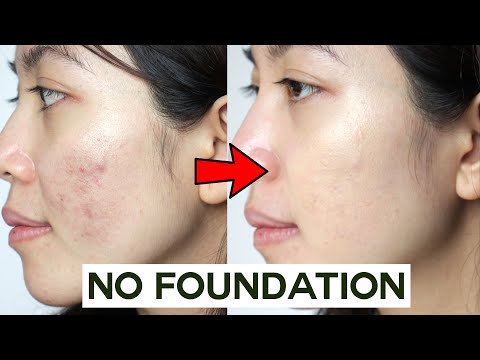
One of the keys to mixing color is learning to really see the color bias of your primary colors. The last group of hues, tertiary colors, is made from mixing a primary and secondary color. Each color has a two word name, such as red-orange, blue-purple or blue-green. Tertiary colors rest between the colors used to form each on the color wheel. It's common practice in make-up artistry to use color correctors to achieve a balanced skin tone across the face and/or body. This could be covering dark circles under the eye, bruising, hyper pigmentation, vitiligo, rosacea, basically anything that is a contrast to the skin tone.

how to neutralize a color - This mixture together would effectively conceal the dark circles and appear more natural to the surrounding skin

This is when it's important to have a good understanding of color theory, particularly complementary colors. We discussed earlier how complementary colors cancel each other out, so with this exact theory in mind color correcting can be achieved. In relation to the color wheel, skin tones are all found within yellow-orange to red. Skin tones with a cool undertone tend to have a hue towards red-purple. Skin tones with a warm undertone have a hue towards yellow.

how to neutralize a color - Then a touch of the red to help neutralize the green undertones

Dark skin tones and shadows will be found in the 'shades section' while light skin tones and highlights are in the 'tint section'. Skin tones also vary in saturation and therefor can be found anywhere around the hue sections and in through the tone sections but always between yellow –orange to red. If you're someone who highlights, bleaches, or dyes their strands, you're well aware of brassy hair and the constant struggle to correct it. The term "brassiness" has become a broad term for any and all hair color showing too much warmth, but that doesn't mean there's a single, simple solution for banishing any and all brassy tones.

how to neutralize a color - This mixture together would effectively conceal the dark circles and appear more natural to the surrounded skin

Tuesday, January 25, 2022

Where To Find Health Insurance Group Number

Group health insurance plans offer medical coverage to members of an organization or employees of a company. They may also provide supplemental health plans—such as dental, vision, and pharmacy—separately or as a bundle. Risk is spread across the insured population, which allows the insurer to charge low premiums.

where to find health insurance group number - Group health insurance plans offer medical coverage to members of an organization or employees of a company

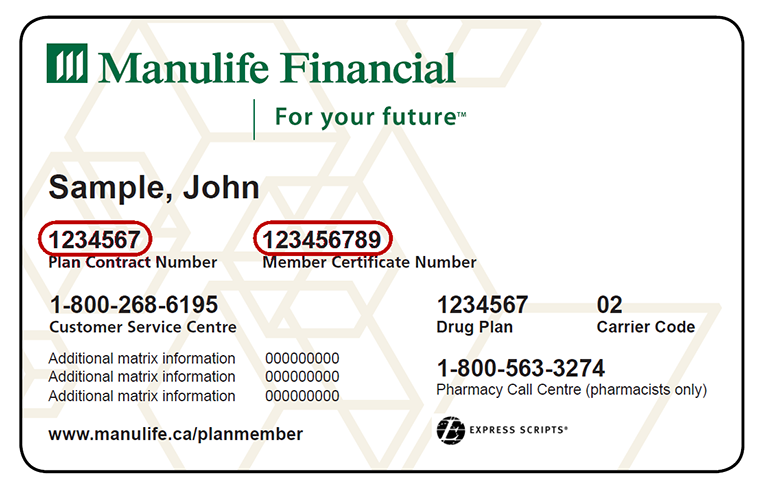
And members enjoy low-cost insurance, which protects them from unexpected costs arising from medical events. Each person covered by a health insurance plan has a unique ID number that allows healthcare providers and their staff to verify coverage and arrange payment for services. It's also the number health insurers use to look up specific members and answer questions about claims and benefits.

where to find health insurance group number - They may also provide supplemental health planssuch as dental

If you're the policyholder, the last two digits in your number might be 00, while others on the policy might have numbers ending in 01, 02, etc. For this reason, Summit Health recommends that you learn the specifics of your plan before upcoming health care visits. Health care providers in your network receive full payment from your insurance company for the agreed-upon rate for your health care services.

where to find health insurance group number - Risk is spread across the insured population

The rate your providers receive includes your insurer's share of the cost as well as your share of the cost. Most patients pay their share of health care costs in a copayment, deductible, or coinsurance. Group insurance plans cover groups of two or more people — which may include an employer, two or more employees, and their families. Individual insurance is a health plan that covers a single employee, with an option to add coverage for that employee's eligible family members.

where to find health insurance group number - And members enjoy low-cost insurance

Group health insurance plans are purchased by companies and organizations and then offered to their members or employees. Plans can only be purchased by groups, which means individuals cannot purchase coverage through these plans. Plans usually require at least 70% participation in the plan to be valid. Because of the many differences—insurers, plan types, costs, and terms and conditions—between plans, no two are ever the same.

where to find health insurance group number - Each person covered by a health insurance plan has a unique ID number that allows healthcare providers and their staff to verify coverage and arrange payment for services

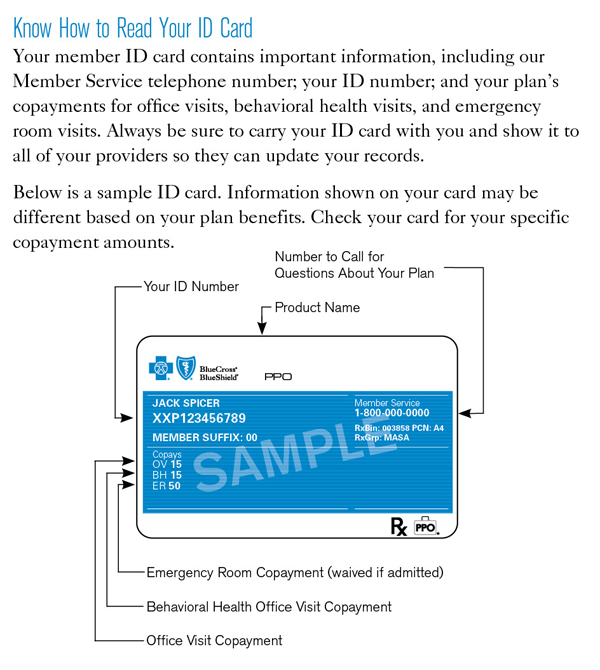
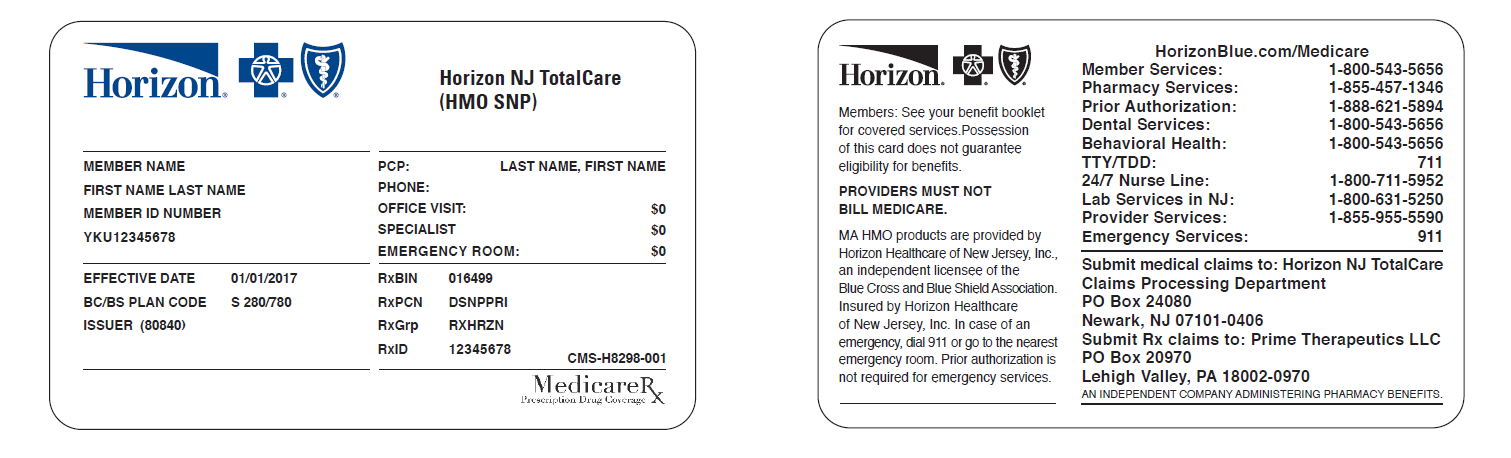
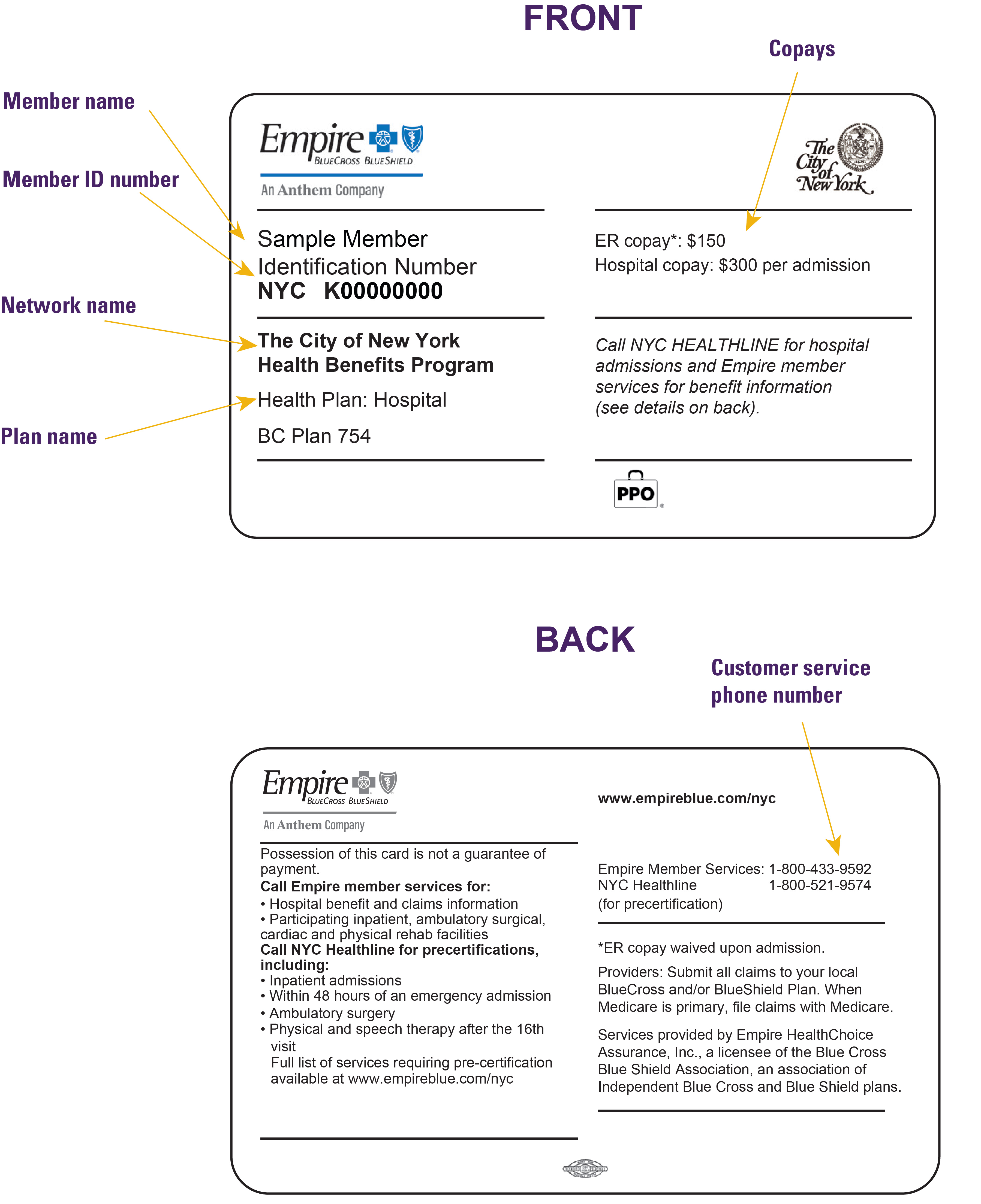
This is usually the amount of your co-payment, or "co-pay." A co-pay is a set amount you pay for a certain type of care or medicine. Some health insurance plans do not have co-pays, but many do. If you see several dollar amounts, they might be for different types of care, such as office visits, specialty care, urgent care, and emergency room care.

where to find health insurance group number - Its also the number health insurers use to look up specific members and answer questions about claims and benefits

If you see 2 different amounts, you might have different co-pays for doctors in your insurance company's network and outside the network. Group health insurance plans are one of the most affordable types of health insurance plans available. Because risk is spread among insured persons, premiums are considerably lower than traditional individual health insurance plans.

where to find health insurance group number - If youre the policyholder

This is possible because the insurer assumes less risk as more people participate in the plan. For employees who ordinarily would not be able to afford individual health insurance, it is an attractive benefit. Government-sponsored health plans continue to provide care to those left out of employer-sponsored group health insurance plans. If you do not see your coverage amounts and co-pays on your health insurance card, call your insurance company .

where to find health insurance group number - For this reason

Ask what your coverage amounts and co-pays are, and find out if you have different amounts and co-pays for different doctors and other health care providers. Many health insurance cards show the amount you will pay (your out-of-pocket costs) for common visits to your primary care physician , specialists, urgent care, and the emergency department. If you see two numbers, the first is your cost when you see an in-network provider, and the second—usually higher—is your cost when you see an out-of-network provider. For example, when you're referred to a specific specialist or sent to a specific hospital, they may not be in your insurer's network. Although all group health insurance plans are different due to variations in costs, health insurance companies, group plan types, and plan specifications, they do have similarities.

where to find health insurance group number - Health care providers in your network receive full payment from your insurance company for the agreed-upon rate for your health care services

Some health insurance plans include special savings accounts for health-related expenses. The key to getting the most out of your savings account is knowing which type you have and how to use it. Check the information your employer gave you to see whether you have a health savings account , health reimbursement account or flexible spending account . Then, use the links below to learn more and find important forms and resources. Your health insurance policy number is typically your member ID number. This number is usually located on your health insurance card so it is easily accessible and your health care provider can use it to verify your coverage and eligibility.

where to find health insurance group number - The rate your providers receive includes your insurers share of the cost as well as your share of the cost

In some cases, your health insurance company can give you a list of comparable, in-network health care providers and services. When you get out-of-network health care and services, you are likely to be responsible for paying some, much, or all of the cost of the service. The amount you must pay for out-of-network services depends on whether your health insurance company is willing to pay part of the bill. For this reason and to avoid unwanted billing surprises, it is best to check with your health insurance company before you get any out-of-network health care services. Employers should make sure your group health plan includes either a group health insurance plan, self-insured health plan, or reimbursement plan so your employees have access to full health benefits. For employees who ordinarily would not be able to afford individual health insurance, a group health plan is an attractive benefit.

where to find health insurance group number - Most patients pay their share of health care costs in a copayment

Group health insurance is also known as employer-sponsored health insurance. Group insurance health plans provide coverage to a group of members, usually a company or organization's employees. Employees usually receive insurance at a reduced cost because the insurer's risk is spread across a large group of policyholders. The vast majority of group health insurance plans are employer-sponsored benefit plans. It is possible, however, to purchase group coverage through an association or other organizations. Examples of such plans include those offered by the American Association of Retired Persons , the Freelancers Union, and wholesale membership clubs.

where to find health insurance group number - Group insurance plans cover groups of two or more people  which may include an employer

Employer-sponsored group health insurance plans first emerged in the 1940s as a way for employers to attract employees when wartime legislation mandated flattened wages. This was a popular tax-free benefit which employers continued to offer after the war's end, but it failed to address the needs of retirees and other non-working adults. Federal efforts to provide coverage to those groups led to the Social Security Amendments of 1965, which laid the foundation for Medicare and Medicaid. A member ID number and group number allow healthcare providers to verify your coverage and file insurance claims for health care services.

where to find health insurance group number - Individual insurance is a health plan that covers a single employee

What Is My Health Insurance Group Number It also helps UnitedHealthcare advocates answer questions about benefits and claims. Your insurance plan may require multiple copays, higher deductibles, and coinsurance. You can learn the details of your policy by visiting your insurance company's web site or contacting its customer/member services department.

What Is My Health Insurance Group Number

The back of your insurance card should include the phone numbers and Web site addresses you'll need. At first glance, the terms "group health plan" and "group health insurance" seem the same. Group health insurance plans through Paychex Insurance Agency can be bundled with payroll and other services so you can manage benefits and HR more accurately in just a few steps.

where to find health insurance group number - Plans can only be purchased by groups

If you have family members listed as dependents on your health insurance plan, they may each have their own unique policy number as it is used for identification purposes and billing procedures. Your health insurance policy number is what identifies you as a covered individual under your current or previous plans. It's important because if you change jobs or get married, divorced, etc., then your HIPN will need to match the new situation. If you move out of state, your HIPN needs to reflect where you live now. Your member ID number and group number allow healthcare providers to verify your coverage and file claims for health care services.

where to find health insurance group number - Plans usually require at least 70 participation in the plan to be valid

These numbers also help UnitedHealthcare advocates answer questions about your benefits and claims. If you forget or aren't sure what type of health insurance plan you have , you can find out on your BCBS ID card. If you have an HMO, your card may also list the physician or group you've selected for primary care. Determining whether a provider is in-network is an important part of choosing a primary care physician.

where to find health insurance group number - Because of the many differencesinsurers

If you have health insurance through work, your insurance card probably has a group plan number. The insurance company uses this number to identify your employer's health insurance policy. Your insurance company may provide out-of-area coverage through a different health care provider network.

where to find health insurance group number - This is usually the amount of your co-payment

If so, the name of that network will likely be on your insurance card. This is the network you'll want to seek out if you need access to healthcare while you're away on vacation, or out of town on a business trip. In this article, we'll dive deeper into what group health plans and group health insurance plans are and how they differ. With an individual health insurance policy, a covered individual pays for 100% of their own premiums. On the other hand, employers and employees can share the costs of group health insurance, with employers covering some or all of the premium costs for a single employee and their dependents. The risk is also spread across a greater number of people for group health insurance policies.

where to find health insurance group number - Some health insurance plans do not have co-pays

After you enroll in a private health plan and pay your first month's premium, you will receive a membership package with your insurance card and summary of benefits and coverage detailed information. Group health plans are employer- or group-sponsored plans that provide healthcare to members and their families. The most common type of group health plan is group health insurance, which is health insurance extended to members, such as employees of a company or members of an organization. If you lose your health insurance card with your policy and group number on it, it is important to contact your health insurance company right away and let them know. Call your insurance provider's customer service number and a representative should be able to help you. When you get a health insurance policy, that policy has a number.

where to find health insurance group number - If you see several dollar amounts

On your card, it is often marked "Policy ID" or "Policy #." The insurance company uses this number to keep track of your medical bills. Your health insurance company works with providers to agree upon a rate for a variety of health care costs. Once providers have agreements with your health insurance company, they are considered in network. Depending on how many employees there are, benefits covered by group and individual plans may be different. All health plans for individuals and businesses with fewer than 50 full-time equivalent employees cover the same 10 essential health benefits.

where to find health insurance group number - If you see 2 different amounts

But if your employer has 51 or more full-time equivalent employees, they have more say in what your plan does and doesn't cover. Typical group health plans include health maintenance organization plans and preferred provider organization plans. While HMO plans have the advantage of lower premiums due to fewer providers within a specific network, they provide less flexibility in terms of how members can receive medical care. For non-emergencies, some HMO plans allow you to get health care services from a Blue Cross and Blue Shield-affiliated doctor or hospital when you are traveling outside of Illinois. If you aren't sure, contact customer service at the number listed on your member ID card before you go. And always remember to carry your current BCBSIL member ID card.

where to find health insurance group number - Group health insurance plans are one of the most affordable types of health insurance plans available

It contains helpful information for accessing health care at home or away. Group Insurance health plans provide coverage to a group of members, usually comprised of company employees or members of an organization. Group health members usually receive insurance at a reduced cost because the insurer's risk is spread across a group of policyholders. The share of costs covered by your insurance that you pay out of your own pocket. Your health insurance policy allows you to enjoy medical services offered by providers included in Harel's agreement, at no cost.

where to find health insurance group number - Because risk is spread among insured persons

Create a HealthPartners account to get the most from your health insurance plan. You only need to know your member ID number and your birth date. Once you create an account, you can view your benefits, track your medical spending, compare the cost of medical procedures and find ways to lower the cost of care. The back of your member ID card includes contact information for providers and pharmacists to submit claims. It also includes the member website and health plan phone number, where you can check benefits, view claims, find a doctor, ask questions and more. The most common type of group health plan is group health insurance, which is a type of medical insurance policy for employees or members of a company or organization.

where to find health insurance group number - This is possible because the insurer assumes less risk as more people participate in the plan

Your health insurance company might pay for some or all the cost of prescription medicines. If so, you might see an Rx symbol on your health insurance card. But not all cards have this symbol, even if your health insurance pays for prescriptions. Sometimes, the Rx symbol has dollar or percent amounts next to it, showing what you or your insurance company will pay for prescriptions.

where to find health insurance group number - For employees who ordinarily would not be able to afford individual health insurance

You might see another list with 2 different percent amounts. The back or bottom of your health insurance card usually has contact information for the insurance company, such as a phone number, address, and website. This information is important when you need to check your benefits or get other information. For example, you might need to call to check your benefits for a certain treatment, send a letter to your insurance company, or find information on the website. Different insurance plans sometimes cover different pharmacy networks.

where to find health insurance group number - Government-sponsored health plans continue to provide care to those left out of employer-sponsored group health insurance plans

For example, CDPHP employer plans use a Premier network; CDPHP individual plans use a Value network; and CDPHP plans for seniors use the Medicare network. A doctor or practitioner, specialist, hospital, pharmacy, or other health care provider or service that has no agreement with your insurance company is considered out of network. Most private-sector group health plans are covered by the Employee Retirement Income Security Act . Among other things, ERISA provides protections for participants and beneficiaries in employee benefit plans, known as participant rights, including providing access to plan information. Also, those individuals who manage the plans and other fiduciaries must meet certain standards of conduct under the responsibilities specified under the law.

where to find health insurance group number - If you do not see your coverage amounts and co-pays on your health insurance card

A group health plan is an umbrella term, encompassing a number of different kinds of employer-provided benefit plans that provide healthcare to members and their families. The plan is established or maintained by an organization that offers medical care to the participants directly through insurance, reimbursement, or otherwise. A group health insurance plan covers specific medical expenses for you and your participating employees. Group dental, vision plans, and other voluntary insurance are offered separately. A group health insurance policy makes sense now more than ever. In most cases, you can only sign up for a health insurance plan during the open enrollment period.

where to find health insurance group number - Ask what your coverage amounts and co-pays are

If you missed open enrollment, you may be able to enroll during the special enrollment period. To be eligible, you must have had a qualifying "life event" within the past 60 days or experienced other complications that did not allow you to complete your enrollment. Your first premium payment activates your coverage, so you can start using your health plan within 1–2 days of making your payment, depending on how you pay. After you've made your first payment and your coverage is activated, you can have health care expenses during that coverage gap applied to your deductible, or even get paid back for some services. In this case, the coverage gap would be the time between your requested effective date and the date you make your first payment. The average group health insurance policy costs a little more than $7,400 for an individual annually, with employers paying approximately 80% and employees paying the difference.

where to find health insurance group number - Many health insurance cards show the amount you will pay your out-of-pocket costs for common visits to your primary care physician

When you go to an appointment with your health care provider, they will ask you for your insurance information. The "coverage amount" tells you how much of your treatment costs the insurance company will pay. This information might be on the front of your insurance card. It is usually listed by percent, such as 10 percent, 25 percent, or 50 percent. For example, if you see 4 different percent amounts, they could be for office visits, specialty care, urgent care, and emergency room care.

where to find health insurance group number - If you see two numbers

How To Neutralize A Color

So a quick peek at your wheel shows you violet sits directly across from yellow, blue-violet sits directly across from gold, blue sits oppos...